
WELCOME BONUS 200%
UP TO €1500 + 200
FREE SPINS
UP TO €1500 + 200
FREE SPINS
Home → Blackjack
Blackjack at Oscarspin: Variants, Rules and Payouts
What Percentage Does Blackjack Count Towards Bonus?
Blackjack contributes only 10 percent toward the wagering requirements for the 300% welcome bonus up to €2,000 plus 100 free spins. This low contribution rate means players must generate significantly more turnover compared to slots which count at 100 percent to clear the same bonus amount effectively. Consequently, a €100 bet on blackjack adds merely €10 to the required turnover total, extending the time needed to unlock withdrawable funds considerably.
Table games like Lightning Blackjack and Infinite Blackjack fall under this restrictive 10 percent contribution category set by the casino terms. In contrast, slot games contribute fully, making them mathematically superior for clearing the bonus quickly without excessive playthrough volume. Players aiming to maximize their bankroll efficiency should prioritize high-contributing games over table variants during the active bonus period.
The disparity between the 10 percent table contribution and the 100 percent slot contribution creates a distinct strategic choice for bonus hunters. A player betting €50 per hand on blackjack generates only €5 of progress, whereas the same stake on slots yields €50. This ratio forces users to adjust their bankroll expectations and play duration when utilizing the maximum €2,000 bonus offer available.
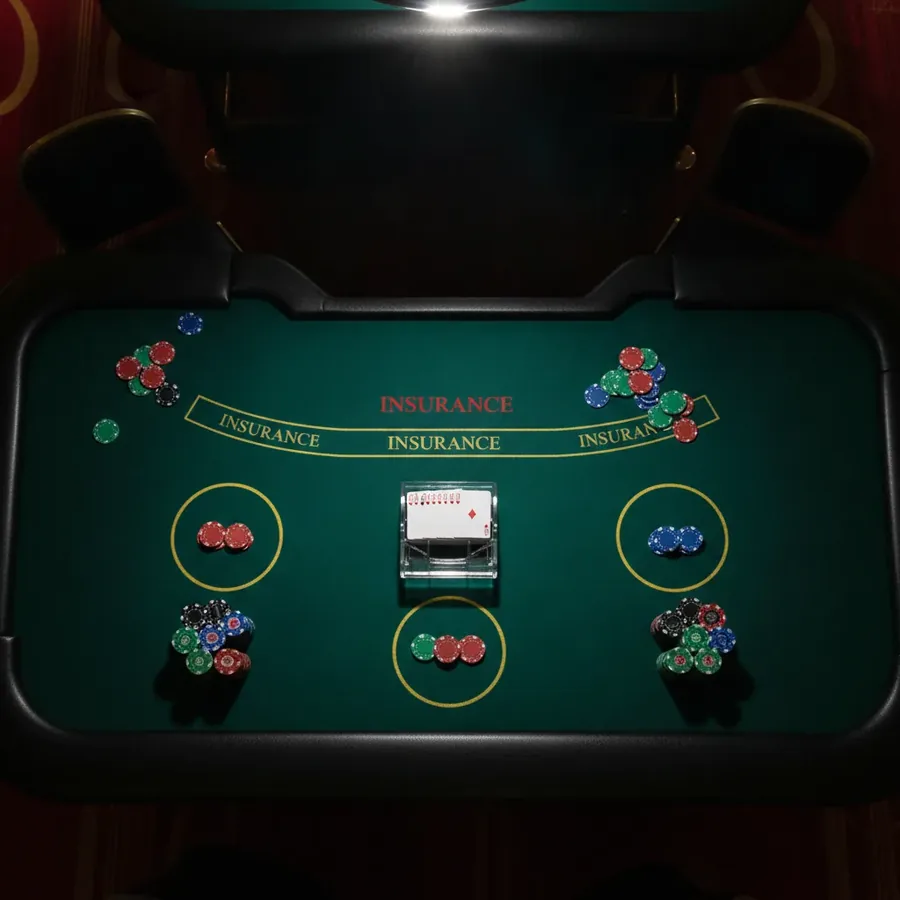
Stand-on-17 Rule and Its Meaning for Players
Blackjack 6 Decks features a stand-on-17 rule where the dealer stands on Soft 17, resulting in a house edge of just 0.46 percent. This specific configuration allows doubling on any two cards and after splits, creating one of the most favorable standard rulesets available for mobile players seeking lower variance gameplay options.
In contrast, variations where the dealer hits Soft 17 increase the house advantage by approximately 0.22 percentage points according to statistical analysis. This slight increase in the casino's mathematical edge can significantly impact long-term profitability for players employing basic strategy on mobile devices during extended gaming sessions.
The Liberal Vegas Strip variant offers an even better RTP of 99.72 percent by combining S17 with double after split and late surrender options. This combination reduces the house edge to 0.28 percent, providing a superior mathematical environment compared to standard six-deck games that lack these liberal player-friendly adjustments.
Split, Double Down, and Surrender in Numbers
Resplitting Aces improves the player's expected return by 0.08 percentage points compared to restrictions that limit aces to a single split hand only. This rule modifier is crucial for mobile blackjack enthusiasts who frequently encounter pairs of aces and need optimal strategies to minimize the house edge effectively during play.
Double After Split enhances the game value by approximately 0.14 percentage points, allowing players to double down on any new hands created after splitting initial cards. This flexibility significantly increases potential winnings from strong starting positions while maintaining strict adherence to basic strategy principles for optimal mathematical outcomes.
Late Surrender provides a valuable reduction of 0.08 percentage points in the house edge by allowing players to forfeit half their bet after checking for dealer blackjack. Early surrender is much more valuable at minus 0.6 percent but remains extremely rare, making late surrender the primary defensive tool for mitigating losses in unfavorable situations.
Insurance Pays 2:1 Yet Still Costs Money
Blackjack Insurance pays 2:1 when the dealer shows an ace, yet it carries a massive house edge of 7.47 percent for standard players. This side bet requires a separate wager up to 50 percent of the main bet and drastically reduces overall returns unless the player employs advanced card counting techniques.
Basic strategy universally dictates rejecting insurance because the negative expected value outweighs the potential payout from the 2:1 odds offered on successful wagers. Only players tracking a true count greater than or equal to +3 should consider taking insurance, as this specific condition shifts the mathematical advantage back to the player temporarily.
The Insurance bet is available across multiple decks ranging from six to eight, complicating the decision matrix for casual mobile gamers who lack counting skills. Taking this bet without a positive true count guarantees a long-term loss, making it a predatory option designed to extract additional funds from uninformed players during gameplay sessions.
Error insurance: 7 percent additional house edge
The Blackjack Insurance side bet introduces an approximate 7 percent additional house edge compared to the base game without this optional wager attached. This substantial penalty arises because the probability of the dealer having a ten-value card does not justify the 2:1 payout structure offered by the casino rules consistently.
Players accepting insurance on every hand with an ace exposed effectively pay a premium that erodes their bankroll far faster than standard gameplay alone. The mathematical disadvantage remains constant regardless of deck penetration, ensuring that casual players suffer significant cumulative losses over time when relying on this flawed side bet strategy.
Blackjack variants at a glance
| Variant | Payout | House edge | Rule | Bet range |
|---|---|---|---|---|
| Blackjack Ein Deck, klassische Regeln, 3:2 | 99.85% | 0.15% | Weniger Decks = niedrigerer Vorteil; ein Deck gibt ca. −0.48 Prozentpunkte gegenüber 8 Decks. Oft durch 6:5 Auszahlung kompensiert. | Blackjack 3:2, Gewinn 1:1 |
| Blackjack Insurance / Versicherung (6–8 Decks) | 92.53% | 7.47% | Separate Nebenwette bis 50% der Hauptwette, wenn der Dealer ein Ass hat. Basisstrategie schreibt IMMER Ablehnung vor (außer Karten zählen bei True Count ≥ +3). Bei einem Deck Vorteil ≈ 5.88% | Insurance 2:1 |
| Blackjack Liberal Vegas Strip (liberale Regeln, 3:2) | 99.72% | 0.28% | Günstigste Regelkombination: S17 + DAS + Resplit + Late Surrender. Standardabweichung 1,15 | Blackjack 3:2, Gewinn 1:1 |
| Blackjack Split / Double / H17 – Regel-Effekte | n.a. (Regel-Modifikatoren) | H17 +0.22 Prozentpunkte; RSA −0.08 Prozentpunkte; DAS −0.14 Prozentpunkte | Dealer Hits Soft 17 verschlechtert RTP um 0.22 Prozentpunkte; Resplit Aces verbessert um 0.08 Prozentpunkte; Double After Split verbessert um ca. 0.14 Prozentpunkte; 6 Decks statt 8 – ca. 0.02 Prozentpunkte. | Double – Einsatz ×2 mit einer Karte; Split – bis 4 Hände; Ass-Split meist mit einer Karte. |
| Blackjack 6 Decks, S17, DAS, DOA, Auszahlung 3:2, Basisstrategie | 99.54% | 0.46% | Dealer steht auf Soft 17; Verdopplung auf jeder Zweierkarte; Verdopplung nach Split erlaubt; keine Aufgabe. Basisstrategie ist für diesen Wert zwingend | Blackjack 3:2, normaler Gewinn 1:1, Insurance 2:1 |
| Blackjack Surrender (Late Surrender) – Regel-Effekt | n.a. (Regel-Modifikator) | −0.08 Prozentpunkte | Spieler gibt Hand nach Dealer-Blackjack-Prüfung auf, verliert die Hälfte des Einsatzes. Verbessert RTP um ca. 0.08 Prozentpunkte. Early Surrender ist wesentlich wertvoller (bis −0.6 Prozentpunkte), aber extrem selten. | Rückzahlung 50% des Einsatzes |
Ace Split: only one card per hand
Blackjack Split allows players to split Aces into two separate hands, but the restriction limits each new hand to receiving exactly one additional card. This rule modifies the base house edge by improving the Return to Player (RTP) by 0.08 percentage points compared to unrestricted splitting. Consequently, players lose potential doubling opportunities on strong starting cards like a ten-value card following an Ace. The trade-off reduces variance slightly while maintaining a standard deviation of 1.15 for the Liberal Vegas Strip variant.
The benefit of this specific rule is quantified at +0.08% against the house edge when comparing it to standard eight-deck games. Without this restriction, the casino would retain more value from the high-probability scenarios where Aces form strong totals. Players must adjust their basic strategy to account for this limitation, as they cannot capitalize on further splits or multiple hits. This adjustment is critical for maintaining the theoretical 99.72% RTP associated with liberal rule sets.
In practice, the one-card limit applies universally across all split Aces, preventing the creation of multiple winning hands from a single pair. This constraint distinguishes the game from more liberal variants found in other jurisdictions or platforms. The impact on long-term bankroll management is marginal but measurable over thousands of hands. Players seeking maximum mathematical advantage should prioritize games offering resplitting capabilities alongside this rule.
Perfect Pairs vs 21+3 in House Edge
The Infinite Blackjack table offers four side bets including Any Pair and 21+3, which are distinct from the Perfect Pairs wager often found in standalone games. These side bets generally carry significantly higher house edges than the main game, which sits at 0.46% for the six-deck S17 version. Understanding these differences is crucial for managing overall volatility and expected loss rates.
The main game RTP of 99.47% for Infinite Blackjack contrasts sharply with typical side bet returns, which often exceed 5% house edge. Side bets like Hot 3 and Bust It provide entertainment value but drain bankrolls faster due to unfavorable odds compared to the primary blackjack outcome. Players relying on these wagers will experience higher variance and lower long-term retention compared to those playing pure strategy-based hands. The distinction between side bet mechanics and core gameplay rules defines the strategic depth available at the live table.
Comparing the main game's 0.46% house edge to side bets reveals the cost of chasing auxiliary payouts. The Unlimited Player capacity in Lightning Blackjack allows up to 25x multipliers, yet these promotional features do not alter the underlying mathematical expectation of standard side bets. Players must recognize that betting on pairs or suits does not improve their chances of beating the dealer's final hand. Strategic discipline requires ignoring these high-edge options to preserve the integrity of the 99.54% RTP achievable through optimal play.
Step-by-step Split at the Live Table
Splitting occurs when a player receives two cards of the same rank, allowing them to divide the hand into two independent bets equal to the original stake. For example, splitting a pair of eights creates two hands starting with eight, each requiring a new decision based on the dealer's upcard. This action is permitted up to four hands total, maximizing the opportunity to recover from weak starting positions like 16. The process follows strict sequencing: initial deal, split decision, playing out each hand separately until completion.
The cost of splitting is immediate, as it doubles the active exposure on the table for that round. If a player splits Aces, each resulting hand receives only one card, limiting subsequent actions to standing or hitting once. This restriction prevents the compounding of advantages that might arise from multiple doublings on soft totals. The visual interface at live tables clearly delineates each split hand, ensuring transparency in bet placement and card distribution for all participants.
Executing a split correctly depends on basic strategy charts tailored to the specific rule set, such as Hit Soft 17 or Double After Split availability. In the Liberal Vegas Strip variant, DAS improves RTP by approximately 0.14 percentage points, making splits more valuable mathematically. Players who fail to split favorable pairs like fives or fours according to chart recommendations incur a hidden tax on their bankroll. Mastery of these sequential decisions separates casual players from those optimizing for the lowest possible house edge.
Continuous Shuffling Machine shuffles after each round
The use of Continuous Shuffling Machines (CSM) ensures that cards are returned to the shoe immediately after every completed hand, preventing any form of card counting. This mechanism eliminates the ability to track the ratio of high to low cards remaining in the deck, thereby neutralizing a key advantage for skilled players. Standard blackjack games using six to eight decks typically rely on periodic reshuffling, whereas CSM technology maintains a constant state of randomness throughout the session.
The impact on game integrity is significant, as it forces all players to rely solely on basic strategy without temporal biases. While this protects the casino from professional advantage players, it also removes the occasional positive expectation moments that card counters exploit. For recreational players, this means the house edge remains static and predictable, unaffected by streaks of favorable cards. The 99.54% RTP figure assumes perfect basic strategy application, which is the only viable approach under continuous shuffling conditions.
Live dealer tables may utilize different technologies than automated digital versions, but the principle of preventing countable sequences remains consistent in regulated environments. The absence of penetration analysis means players cannot adjust bet sizes based on deck composition, adhering strictly to flat betting strategies. This structure simplifies the decision-making process but caps the potential upside for those attempting to gain an edge. Consequently, the focus shifts entirely to minimizing errors rather than seeking favorable deck states.
Which rule variants does the software show?
The software presents Blackjack Ein Deck with classic rules offering a 3:2 payout, yielding an RTP of 99.85% and a minimal house edge of 0.15%. Using a single deck reduces the casino advantage by approximately 0.48 percentage points compared to eight-deck shoes, though some tables compensate with less favorable 6:5 payouts. Mobile players must verify the specific payout structure on their device screen before betting to ensure they receive the full 1.5 times return on a natural blackjack.
In contrast, the standard six-deck variant featuring S17, DAS, and DOA rules provides an RTP of 99.54% with a 0.46% house edge, requiring strict adherence to basic strategy for optimal results. This configuration allows doubling on any two cards and after splits, while insurance bets pay 2:1 but carry a significantly higher house edge of 7.47% if played without card counting. Players using mobile devices should note that deviating from the mathematically correct strategy immediately increases the cost per hand and erodes the theoretical return over time.
A critical variation to avoid on mobile is the six-deck game paying 6:5 instead of 3:2, which inflates the house edge to 1.85% and drops the RTP to 98.15%. This specific rule change adds exactly 1.39 percentage points to the casino advantage, making it substantially worse than other rule modifications like dealer hitting soft seventeen. For every $10 wagered on this inferior variant, a natural blackjack pays only $12 rather than the standard $15, drastically reducing long-term bankroll sustainability.
Statistics display saves the last 100 rounds
The live interface tracks the history of the previous 100 rounds for games like Lightning Blackjack, allowing mobile users to review past outcomes before placing new wagers. Evolution’s lightning multiplier can reach up to 25x on winning hands within these tracked sessions, potentially turning small base bets into significant payouts during volatile streaks. Players observing these statistics on smaller screens must remember that historical data does not influence future random number generation or the fixed RTP of 99.56%.
Infinite Blackjack offers unlimited seating and tracks similar statistical histories across its four side bets: Any Pair, 21+3, Hot 3, and Bust It, all operating within a 99.47% RTP framework. The infinite nature ensures no seat availability issues on mobile, while the statistical display helps players monitor side bet frequency without altering the core game strategy. Since side bets generally carry higher house edges than the main game, relying solely on recent win patterns shown in the statistics can lead to erroneous betting decisions.
Blackjack Party maintains a party atmosphere with two moderators while tracking the last 100 rounds, providing a social element alongside the standard statistical transparency available to all participants. With betting limits ranging from 1.00 EUR to 1.000 EUR, the statistical history helps high rollers assess variance within their preferred stake range on mobile devices. However, the entertainment value provided by the moderators does not alter the mathematical expectation, meaning the RTP remains constant regardless of the social interaction level observed.
Seat change at the Live Table in 20 seconds
Players switching seats at Evolution live tables experience a rapid transition period of approximately 20 seconds, ensuring minimal downtime between hands on mobile devices. This quick reset mechanism applies to both Infinite Blackjack and Lightning Blackjack, where the dealer prepares the next shoe while the player navigates the interface. During this brief interval, the system locks out new bets, preventing accidental wagers on the previous round’s outcome while maintaining the integrity of the 99.56% RTP.
The 20-second seat change protocol is particularly relevant for Blackjack Party, where the dynamic environment requires efficient table management to accommodate the partystream format. While the visual elements remain engaging, the underlying mechanics still enforce the standard betting windows and dealer procedures associated with a 1.00 to 1.000 EUR limit range. Mobile users benefit from this speed as it allows for faster gameplay cycles, though the total time invested per hour includes these mandatory administrative pauses between deals.
Statistical tracking resets or updates following the seat change, meaning the 100-round history may reflect a mix of previous and current player interactions depending on the specific table setup. In Infinite Blackjack, where unlimited seats are available, the statistical display continues to aggregate data from the entire virtual table rather than just individual player actions. This collective data presentation helps mobile players understand broader trends, even though their personal 20-second transition period isolates them momentarily from the active dealing cycle.
Splitting costs double bet: plan budget
When splitting pairs in Blackjack variants like the six-deck game with DAS allowed, each new hand requires a bet equal to the original wager, effectively doubling the total exposure per round. For example, splitting a $10 pair creates two $10 hands, increasing the total action to $20 and potentially accelerating bankroll depletion if losses accumulate rapidly on mobile devices. Players must adjust their session budgets accordingly, recognizing that frequent splitting multiplies the impact of the 0.46% house edge on the combined stakes.
The liberal Vegas Strip ruleset permits resplitting Aces, which further amplifies budget requirements since each split Ace generates a new hand costing the original bet amount. Although this rule improves the RTP by 0.08 percentage points, the increased volume of hands played means more money is risked against the 0.28% house edge per decision. Mobile gamers should calculate their maximum allowable splits based on their total deposit, as a single round with multiple splits can consume a significant portion of a limited bankroll.
Insurance bets, which pay 2:1 when the dealer shows an ace, represent a separate wager equal to half the main bet, adding another layer of budget complexity to splitting scenarios. If a player splits and also takes insurance on both hands, the total cost rises sharply, though the 7.47% house edge on insurance makes this statistically unfavorable for most strategies. Careful budget planning is essential to avoid exceeding daily loss limits, especially when combining splitting actions with optional side bets like 21+3 or Hot 3.
Ignored Basic Strategy Chart: 1 Percent Wasted
Ignoring the basic strategy chart in the six-deck S17 game increases the house edge from the optimal 0.46% to approximately 1.46%, effectively wasting one percent of potential return over the long term. This deviation transforms a highly favorable RTP of 99.54% into a significantly weaker performance, costing players roughly ten times more per hour of play compared to perfect strategy execution. Mobile users often lack easy access to charts, but relying on intuition instead of mathematical probability leads to substantial financial erosion across thousands of hands.
In the single-deck variant with a 99.85% RTP, failing to follow basic strategy can erase the inherent 0.15% advantage gained from the reduced deck count, pushing the edge back toward neutral or negative territory. The specific penalty varies by mistake, but consistent errors typically add around 1.00% to the house edge, negating the benefits of playing with fewer decks. Players who attempt to guess dealer patterns on mobile interfaces will find their actual returns diverging sharply from the theoretical 99.85% projection.
Even in games with slightly higher baseline edges like the 6:5 variant, ignoring strategy compounds the existing 1.85% disadvantage, creating a double penalty that severely impacts bankroll longevity. The difference between playing optimally and suboptimally can amount to hundreds of euros lost over a typical weekend session, depending on the betting frequency and stake size. Utilizing digital strategy aids on mobile devices is crucial to maintaining the closest possible alignment with the published RTP figures for any given blackjack rule set.
Contact
Live - online chat
Banking









Providers












oscarspin 2025